
Foreign companies operating in the Netherlands must adhere to strict local regulations regarding corporate governance, tax filings, and financial reporting. Compliance is not optional; it is the foundation for maintaining a valid legal presence and avoiding significant penalties. Schmitz Tax Services helps international businesses navigate these requirements by providing clear, English-language guidance on Dutch subsidiary rules, ensuring that your local entity remains fully compliant with the Dutch Tax Administration and the Chamber of Commerce.
Corporate Governance and Legal Structure
Most foreign companies establish a Dutch private limited company, known as a BV (besloten vennootschap). A BV is a legal entity with limited liability, meaning the company itself is responsible for its debts rather than the shareholders. This structure is the most common vehicle for foreign investment in the Netherlands. However, establishing the entity is only the first step. The Dutch legal framework requires specific governance structures that differ from those in many other jurisdictions.
Every BV must have at least one director, known as a 'statutair lid'. This individual is legally responsible for the company's administration and must be registered with the Chamber of Commerce. The director must be a natural person, not another legal entity. This requirement ensures that there is a specific human being accountable for the company's actions. If the director is a foreign national, they must still fulfill these duties in accordance with Dutch law. Failure to maintain a valid director registration can lead to the company being struck from the register, effectively dissolving the entity.
Additionally, the company must maintain a registered office in the Netherlands. This does not necessarily require a physical office with employees, but it must be a location where the company can be reached and where official documents can be served. Many foreign companies use a virtual office or a service provider for this purpose. The key is that the address must be valid and active. Schmitz Tax Services advises clients on the practical implications of these governance requirements, ensuring that the administrative burden does not become a compliance risk.
Tax Obligations and Filing Deadlines
Once a Dutch subsidiary is operational, it becomes subject to Dutch tax laws. The primary tax is corporate income tax (vennootschapsbelasting). This tax is levied on the profits earned by the company. The Dutch tax system uses a two-tier rate structure, which can be advantageous for smaller companies. The first tier applies to the first portion of taxable profit, while a higher rate applies to the remainder. Understanding these thresholds is crucial for cash flow planning and financial forecasting.
Companies must file an annual corporate income tax return. The deadline for this filing is five months after the end of the financial year. For most companies, the financial year ends on December 31, making the filing deadline May 31 of the following year. However, companies can choose a different financial year, which shifts the deadline accordingly. It is important to note that the deadline for filing is distinct from the deadline for paying any tax due. Late filings can result in penalties, even if no tax is owed. Schmitz Tax Services monitors these deadlines for clients, ensuring that returns are filed on time and in line with current regulations.
In addition to corporate income tax, companies must also handle Value Added Tax (VAT). If the company's turnover exceeds the VAT threshold, it must register for VAT and file quarterly returns. These returns report the VAT charged on sales and the VAT paid on purchases. The difference is either paid to the Tax Administration or refunded to the company. Accurate VAT reporting is critical, as errors can lead to audits and back taxes. The process of filing these returns requires detailed records of all transactions, which ties directly into the bookkeeping requirements discussed in the next section.
Bookkeeping and Financial Reporting
Dutch law requires all companies to maintain proper bookkeeping records. Bookkeeping is the systematic recording of all financial transactions, including sales, purchases, and expenses. These records must be kept for at least seven years. The level of detail required depends on the size of the company and its turnover. Larger companies are subject to stricter reporting standards, while smaller companies may have simplified requirements. However, even small companies must keep records that allow for the reconstruction of their financial position. according to Financial audit Wikipedia
At the end of the financial year, companies must prepare annual accounts. These accounts consist of a balance sheet, a profit and loss statement, and notes to the accounts. For a BV, these annual accounts must be filed with the Chamber of Commerce. This filing is public, meaning that anyone can access the company's financial information. This transparency is a key feature of the Dutch corporate system. It ensures that stakeholders, including creditors and investors, have visibility into the company's financial health. Failure to file annual accounts on time can result in fines and can negatively impact the company's credit rating.
Bookkeeping is not just a legal obligation; it is also a management tool. Up-to-date records provide real-time insight into the company's performance. This allows management to make informed decisions about pricing, investment, and expansion. Schmitz Tax Services provides full bookkeeping services for Dutch subsidiaries, ensuring that records are current throughout the year. This approach prevents the year-end rush and ensures that the figures are accurate when the annual accounts are prepared. By keeping records up to date, companies can also respond more quickly to any queries from the Tax Administration.
Payroll and Employment Compliance
If a Dutch subsidiary employs staff, it must comply with Dutch labor and payroll tax laws. Payroll tax (loonheffing) is a withholding tax that the employer deducts from employees' salaries and pays to the Tax Administration. This tax covers income tax and social security contributions. The employer is responsible for calculating and remitting these amounts correctly. Errors in payroll tax can lead to significant liabilities, as the employer is ultimately responsible for the tax owed by the employee.
Employers must register with the Tax Administration before hiring their first employee. They must also report any changes in employment, such as new hires, terminations, or changes in salary. This reporting is done through a digital system, which requires accurate data. The payroll process is complex, involving various deductions and contributions. It is easy to make mistakes, especially for foreign companies that are not familiar with the Dutch system. Schmitz Tax Services offers payroll administration services, handling the calculations and filings on behalf of the client. This ensures that employees are paid correctly and that the company remains compliant with all payroll tax obligations.
Compliance with labor laws also extends to contract terms and working conditions. Dutch labor law provides strong protections for employees, including rules on working hours, leave, and termination. Foreign companies must ensure that their employment contracts comply with these rules. This may require adapting standard contracts used in other countries. Failure to comply with labor laws can lead to disputes with employees and potential legal action. By working with a local expert, companies can ensure that their employment practices are aligned with Dutch legal requirements.
Cross-Border Considerations and Substance
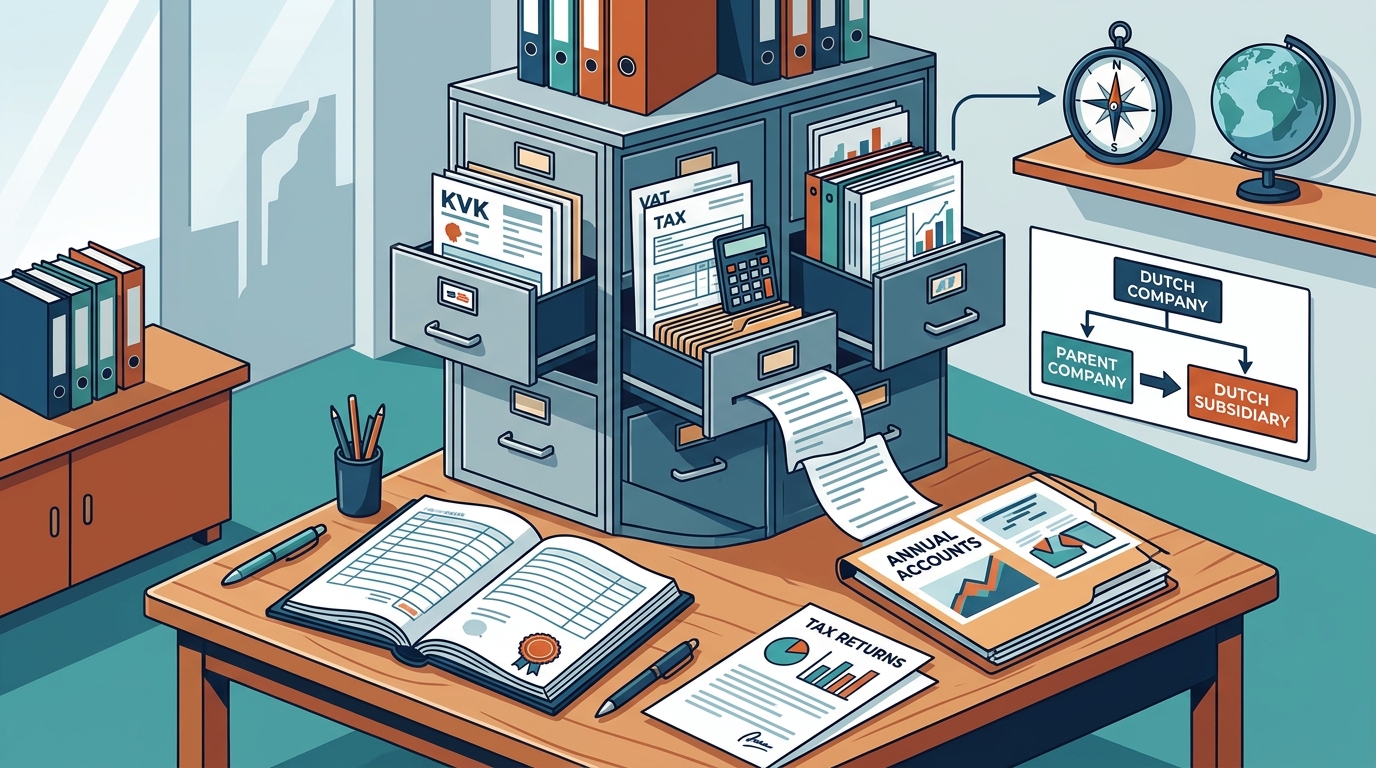
For foreign companies, the Dutch subsidiary is often part of a larger international structure. This raises questions about transfer pricing and the allocation of profits between entities. The Dutch Tax Administration expects that transactions between related parties are conducted at arm's length. This means that the prices charged for goods or services must reflect what would be charged between independent parties. If the Dutch subsidiary is underpriced or overpriced in its dealings with the parent company, the Tax Administration may adjust the taxable profit. This can lead to double taxation if the other country does not make a corresponding adjustment.
Substance is another critical factor. The Dutch government and the Tax Administration are increasingly focused on ensuring that companies have real economic activity in the Netherlands. This means that the subsidiary should have a physical presence, employees, and decision-making authority. A shell company with no employees or office may be viewed with suspicion. The Tax Administration may challenge the location of profits if it believes that the economic activity is taking place elsewhere. To mitigate this risk, companies should ensure that their Dutch subsidiary has sufficient substance. This includes having a local director, employees, and a physical office where key decisions are made.
Double taxation treaties can help mitigate the risk of double taxation. The Netherlands has an extensive network of treaties with other countries. These treaties allocate taxing rights between the two countries and provide mechanisms for resolving disputes. However, the application of these treaties can be complex. It is important to understand the specific provisions of the treaty between the Netherlands and the parent company's home country. Schmitz Tax Services advises clients on cross-border tax matters, ensuring that the structure is optimized and compliant with both Dutch and international rules.
Key Takeaways
- A Dutch BV requires a registered director who is a natural person and a valid registered office in the Netherlands.
- Corporate income tax returns are due five months after the end of the financial year, with strict penalties for late filing.
- Annual accounts must be filed with the Chamber of Commerce and are publicly accessible, ensuring transparency.
- Bookkeeping records must be kept for at least seven years and should be up to date throughout the year.
- Payroll tax must be withheld and remitted to the Tax Administration, with the employer responsible for accuracy.
- Cross-border transactions must be priced at arm's length to avoid transfer pricing adjustments.
Frequently Asked Questions
What is the minimum capital requirement for a Dutch BV?
There is no minimum capital requirement for a Dutch BV. However, the company must have sufficient funds to operate. The initial capital can be paid in cash or in kind, such as assets or services.
Can a foreign company be the sole shareholder of a Dutch BV?
Yes, a foreign company can be the sole shareholder of a Dutch BV. The director, however, must be a natural person. This allows foreign companies to maintain full ownership while complying with Dutch governance rules.
How long does it take to register a Dutch BV?
Registration with the Chamber of Commerce typically takes a few days. The process involves notarizing the articles of association and submitting the registration application. Schmitz Tax Services can assist with this process to ensure it is completed efficiently.
What happens if I miss a tax filing deadline?
Missing a tax filing deadline can result in penalties and interest. The Tax Administration may also initiate an audit. It is important to file on time to avoid these consequences. If you have missed a deadline, it is advisable to contact a tax adviser immediately to address the issue.
Do I need to register for VAT if my turnover is below the threshold?
You are not required to register for VAT if your turnover is below the threshold. However, you may choose to register voluntarily. This can be beneficial if you are making significant purchases subject to VAT, as you can then reclaim the VAT paid.
How does Schmitz Tax Services help with compliance?
Schmitz Tax Services provides a single point of contact for all tax and accounting matters. We handle tax returns, bookkeeping, and payroll administration, ensuring that your Dutch subsidiary remains compliant with all local regulations. Our advice is based on the specific facts and circumstances of your business.
Conclusion
Staying compliant with Dutch subsidiary rules requires a thorough understanding of local regulations and a proactive approach to administration. From corporate governance to tax filings and payroll, each area has its own set of requirements and deadlines. Schmitz Tax Services provides the expertise and support that foreign companies need to navigate these complexities. By working with a local partner, you can ensure that your Dutch subsidiary is fully compliant and positioned for success. To discuss your specific situation, for a free introductory conversation.