
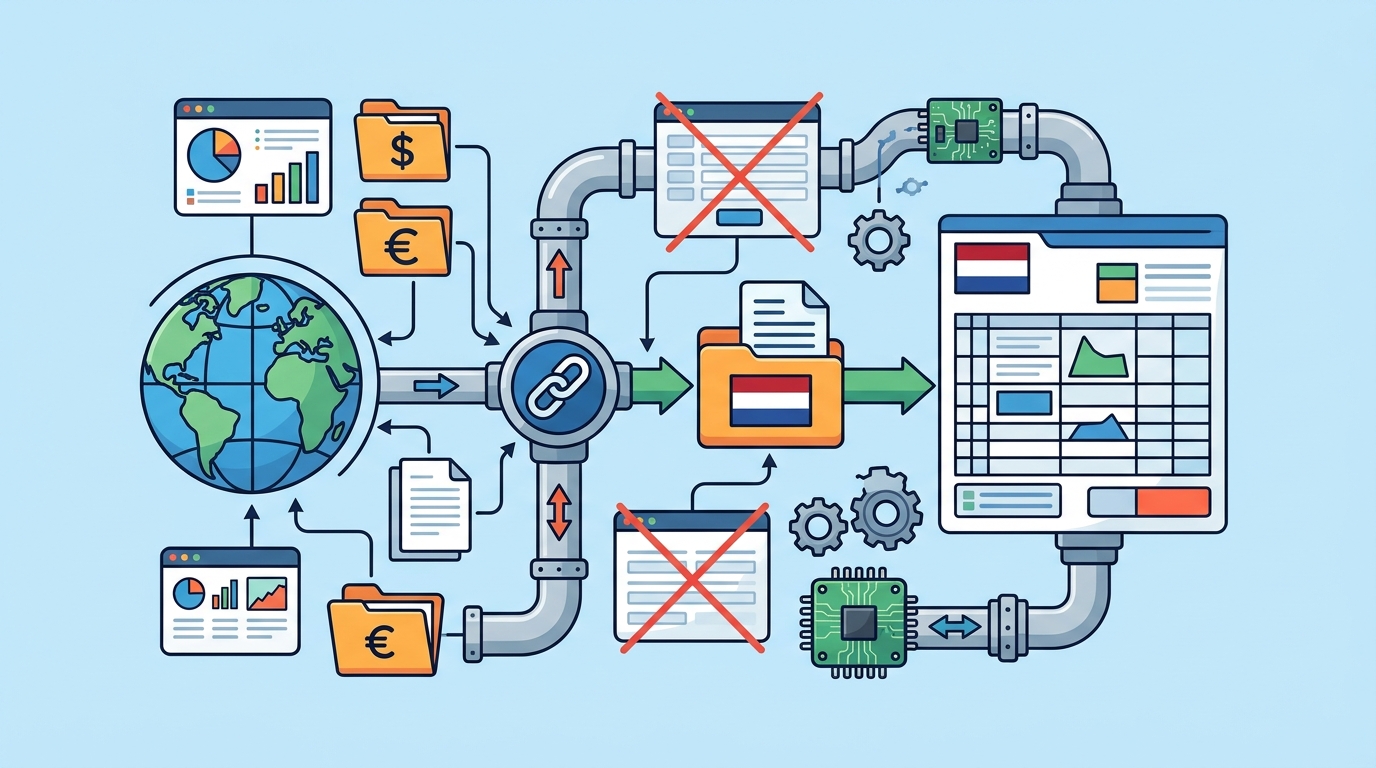
International companies integrate external Dutch tax services by establishing clear data exchange protocols between their global accounting software and the local provider. This connection ensures that financial data flows seamlessly into Dutch tax returns and annual accounts without manual re-entry. Schmitz Tax Services facilitates this by accepting data through accounting software links, scanned folders, or direct paperwork, ensuring records remain current throughout the year.
The Challenge of Cross-Border Data Fragmentation
Global finance teams often struggle with data silos when managing local entities. When a Dutch subsidiary operates independently, its financial records may not align with the parent company's reporting standards. This fragmentation leads to delays in consolidation and increases the risk of errors in statutory filings. The core issue is not just the volume of data, but the format and timing of its transfer.
Effective integration requires a defined data pipeline. Companies must decide whether to push data from their ERP system to the local provider or pull it via API. For many mid-sized international firms, a hybrid approach works best. Critical transactional data flows automatically, while supporting documents are shared via secure digital folders. This method reduces the administrative burden on both the local and global teams.
At Schmitz Tax Services, the process begins with understanding the client's existing setup. The firm analyzes how money flows and what activities take place to determine the optimal data exchange method. This business-first approach ensures that the technical integration supports the operational reality of the company.
Choosing the Right Data Exchange Method
There is no single standard for connecting external tax advisers to corporate finance systems. The choice depends on the complexity of the entity and the software stack in use. Three primary methods dominate the market: direct API integration, file-based transfers, and manual document submission.
Aligning Accounting Standards and Tax Rules
Integration is not just about moving data; it is about ensuring the data is interpreted correctly. International companies often use IFRS or US GAAP for their consolidated reports, while Dutch tax law requires specific adjustments for corporate income tax and VAT. These differences can create discrepancies if not managed properly.
The external tax provider must understand both the local statutory requirements and the parent company's reporting framework. This dual perspective allows for accurate reconciliation. For example, depreciation methods may differ between IFRS and Dutch tax law. The provider must track these differences to ensure the tax return reflects the correct taxable income. Schmitz Tax Services handles this by maintaining full bookkeeping and annual accounts that serve as the basis for tax returns. The records stay current, so figures are usable when needed, not just at year-end.
This alignment prevents costly corrections later. Errors in VAT returns, for instance, often only surface during the year-end close. By addressing tax points during the year, the provider ensures that the data remains accurate and compliant. This proactive approach reduces the risk of penalties and audit findings.
Managing Deadlines and Compliance Monitoring
Dutch tax deadlines are strict and do not always align with global reporting cycles. The income tax return for a calendar year is generally due before 1 May, while corporate income tax is due five months after the end of the financial year. Missing these deadlines results in penalties, even if no tax is owed. Integration must include a monitoring mechanism to track these dates.
External providers play a crucial role in deadline management. They monitor the progress of filings and alert the client when documents are needed. This service is particularly valuable for international companies that may not have a dedicated local compliance team. Schmitz Tax Services monitors all deadlines and informs clients in good time about what is still needed. This ensures that filings are submitted on time and in line with Dutch tax law.
Building a Sustainable Integration Framework
Successful integration is a long-term relationship, not a one-time setup. It requires clear communication, defined responsibilities, and regular reviews. Companies should establish a single point of contact for all tax and accounting matters. This simplifies communication and ensures that issues are addressed quickly.
Regular reviews of the integration process are essential. As the business grows or changes, the data exchange methods may need to be adjusted. The provider should be proactive in suggesting improvements to the workflow. This ongoing collaboration ensures that the integration remains efficient and effective over time.
Key Takeaways
- Define a clear data exchange protocol between your global ERP and local tax provider.
- Choose the right method: API, file transfer, or manual submission based on complexity.
- Align accounting standards (IFRS/GAAP) with Dutch tax rules to avoid discrepancies.
- Implement deadline monitoring to ensure timely filing of VAT, payroll, and income tax.
- Maintain a single point of contact for consistent communication and context.
- Review the integration process regularly to adapt to business changes.
Frequently Asked Questions
Can I keep using my existing accounting software?
Yes, you can continue using your current accounting software. The external provider can receive data through a link with your software, a folder of scans, or direct paperwork. The key is to establish a reliable method for transferring data.
How do I handle differences between IFRS and Dutch tax law?
The external provider must understand both frameworks. They will track differences in depreciation, provisions, and other items to ensure the tax return reflects the correct taxable income. This requires a provider with experience in both local and international standards.
What happens if I miss a Dutch tax deadline?
Missing a deadline results in a penalty, even if no tax is owed. The external provider should monitor all deadlines and alert you when documents are needed. This proactive approach helps prevent late filings.
Do I need a dedicated local compliance team?
Not necessarily. An external tax provider can handle all local compliance obligations, including VAT, payroll, and income tax. This allows you to focus on your core business without maintaining a large local team.
How often should I review the integration process?
It is recommended to review the integration process at least once a year, or whenever there are significant changes to your business or software. This ensures that the data exchange remains efficient and accurate.
Conclusion
Integrating external Dutch tax services with existing financial systems requires a strategic approach to data exchange, compliance monitoring, and communication. By choosing the right provider and establishing clear protocols, international companies can ensure that their Dutch operations are compliant and efficient. Schmitz Tax Services offers a flexible and proactive approach to this integration, supporting clients with full bookkeeping, annual accounts, and tax returns. To discuss how to integrate your financial systems with a Dutch tax provider, .