
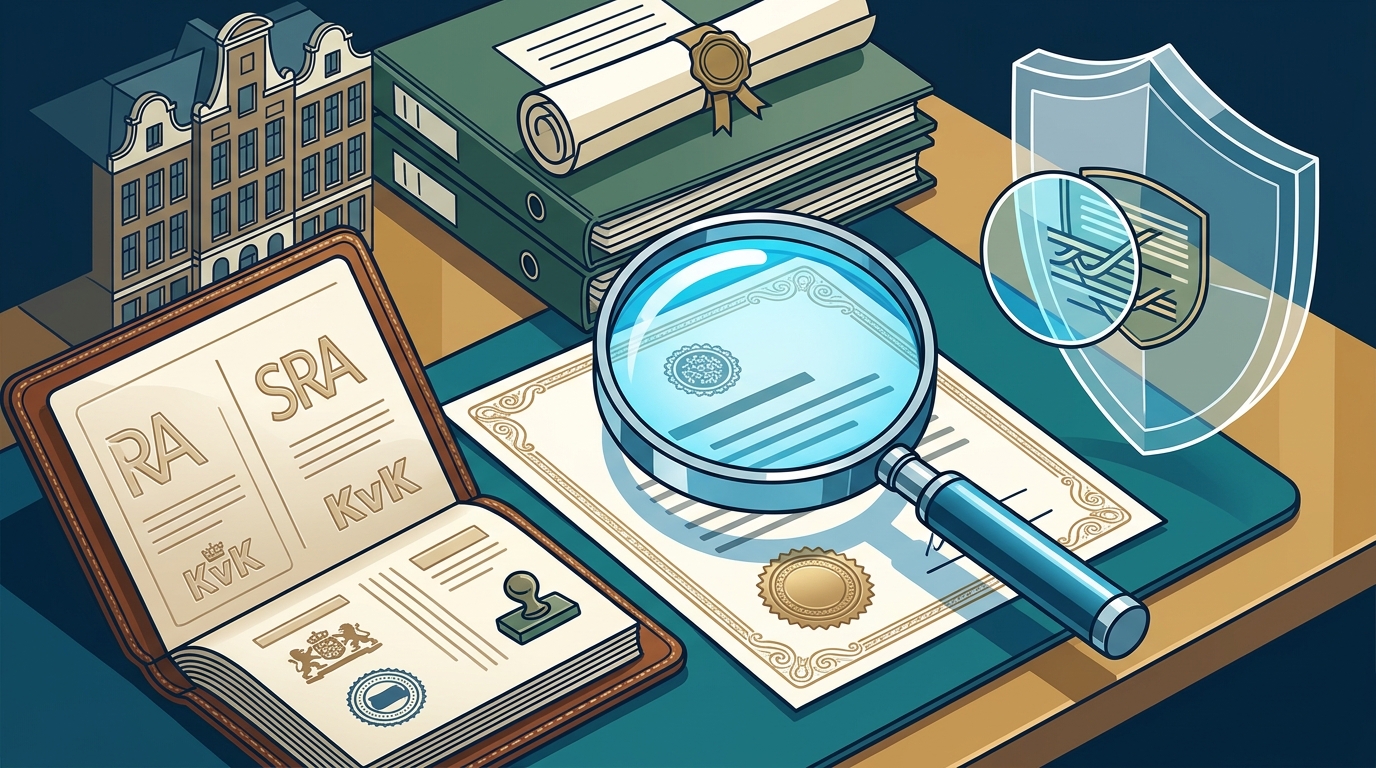
Verifying a Dutch tax adviser's qualifications involves checking their registration with the Dutch Chamber of Commerce and confirming any professional titles like RA or SRA. You must also verify their insurance coverage and ensure their advice aligns with current Dutch tax legislation. This process protects your business from unregulated advice and ensures compliance with local laws.
The Chamber of Commerce Registration
Every legitimate business in the Netherlands must register with the Dutch Chamber of Commerce (Kamer van Koophandel). This registration is the first step in verifying any service provider. A tax adviser's registration number is public and can be checked online. If a provider cannot provide their Chamber of Commerce number, or if the registration is inactive, you should not proceed. This basic check confirms the entity exists and is legally allowed to operate in the Netherlands.
For example, Schmitz Tax Services is registered under number 91165253. You can verify this number on the official Chamber of Commerce website. This transparency is a hallmark of a professional practice. It allows clients to confirm the legal status of the firm before sharing sensitive financial data. Always ask for this number during the initial consultation.
Understanding Professional Titles
Professional titles in the Netherlands carry specific legal weight. The title 'Belastingadviseur' (Tax Adviser) is protected and requires specific qualifications. However, not all tax advisers hold the same level of certification. Some hold the RA (Registered Accountant) or SRA (Senior Registered Accountant) titles, which indicate higher levels of auditing and accounting expertise. It is crucial to distinguish between a general tax adviser and a registered accountant, as their scopes of work differ.
A tax adviser is a professional who provides advice on tax matters, while a registered accountant is qualified to perform statutory audits. If a provider claims an RA title, verify their registration with the SRA (Society of Registered Accountants). This ensures the title is legitimate and current. Be wary of providers who use vague terms like 'financial expert' without specifying their protected title. Clarity in credentials is a sign of professionalism.
Insurance and Liability Coverage
Professional liability insurance is a critical component of a legitimate tax practice. This insurance covers errors and omissions in the advice provided. In the Netherlands, professional liability insurance is mandatory for registered accountants and strongly recommended for all tax advisers. You should ask for proof of this coverage. A reputable firm will provide a certificate of insurance upon request. This protects you if the advice leads to financial loss or penalties from the Tax Administration.
For instance, Schmitz Tax Services maintains professional liability insurance to protect its clients. This coverage is a standard part of their service offering. It demonstrates a commitment to accountability and quality. If a provider refuses to discuss their insurance, consider that a red flag. Your financial interests are at stake, and the adviser should be equally committed to protecting them.
Continuing Education and Compliance
Tax laws in the Netherlands change frequently. A legitimate adviser must engage in continuing professional education (CPE) to stay current. This ensures their advice reflects the latest legislation and case law. Ask about their CPE hours and how they stay updated on regulatory changes. A committed professional will be able to explain their learning process and recent updates in the field. This ongoing education is what keeps their qualifications 'up to date' in a dynamic legal environment.
For example, changes in VAT rules or corporate income tax thresholds require immediate attention. An adviser who does not invest in their own education may provide outdated advice. This can lead to compliance issues and financial penalties. By asking about their CPE, you gauge their commitment to professional excellence. It is a simple question that reveals a lot about their diligence.
Practical Steps for Verification
At Schmitz Tax Services, we encourage clients to verify our credentials. We provide our Chamber of Commerce number and details of our professional insurance upon request. This transparency is part of our commitment to building trust. We believe that informed clients make better decisions. By taking these steps, you protect your business and ensure you are working with a qualified professional.
Key Takeaways
- Always verify the Chamber of Commerce registration number of any Dutch tax adviser.
- Distinguish between general tax advisers and registered accountants (RA/SRA).
- Request proof of professional liability insurance to protect against errors.
- Ask about continuing professional education to ensure advice is current.
- Be wary of providers who cannot provide clear proof of their credentials.
- Transparency in credentials is a sign of a professional and accountable practice.
Frequently Asked Questions
Is the title 'Tax Adviser' protected in the Netherlands?
Yes, the title 'Belastingadviseur' is protected in the Netherlands. Only professionals who meet specific educational and experience requirements can use this title. This protection ensures a minimum standard of competence.
How do I check if an RA title is valid?
You can check the validity of an RA or SRA title by searching the register of the SRA (Society of Registered Accountants). This register is public and lists all registered accountants in the Netherlands.
Do I need to verify the insurance of my tax adviser?
Yes, you should request proof of professional liability insurance. This insurance covers errors and omissions in the advice provided. It is a standard requirement for registered accountants and recommended for all tax advisers.
What is the Chamber of Commerce number for Schmitz Tax Services?
The Chamber of Commerce number for Schmitz Tax Services is 91165253. You can verify this number on the official Chamber of Commerce website.
How often do tax laws change in the Netherlands?
Tax laws in the Netherlands change frequently, often with annual budget updates. Advisers must engage in continuing education to stay current with these changes.
Can I switch tax advisers if I am not satisfied?
Yes, you can switch tax advisers at any time. It is important to communicate your concerns and ensure a smooth transition of your records and files.
Conclusion
Verifying the qualifications of a Dutch tax adviser is a simple but essential step in protecting your business. By checking the Chamber of Commerce registration, professional titles, and insurance coverage, you ensure you are working with a legitimate and competent professional. This process builds trust and ensures compliance with Dutch tax laws. At Schmitz Tax Services, we are committed to transparency and professionalism. We encourage you to verify our credentials and ask questions about our approach. To start your verification process or to discuss your tax needs, .