
Forming a Dutch BV (besloten vennootschap) is a strategic decision that separates your personal assets from business liabilities. For first-time owners, the process involves choosing a legal structure, registering with the Chamber of Commerce, and understanding immediate tax obligations. Schmitz Tax Services helps entrepreneurs navigate these steps, ensuring the business model drives the tax position rather than the other way round.
Choosing the Right Legal Structure
Many new entrepreneurs start as a sole proprietorship (eenmanszaak) before converting to a BV. A BV is a private limited company that offers limited liability, meaning your personal assets are generally protected from business debts. This structure is particularly useful when you plan to hire employees, sign long-term contracts, or seek investment. The choice between a sole proprietorship and a BV depends on your revenue, risk profile, and long-term goals.
Converting an existing sole proprietorship into a BV is a common step once the business stabilizes. This transition requires careful planning to minimize tax friction. At Schmitz Tax Services, we analyze your operational activities and cash flow to determine when the conversion becomes worthwhile. We ensure the structure supports your business model without unnecessary complexity.
The Registration and Incorporation Process
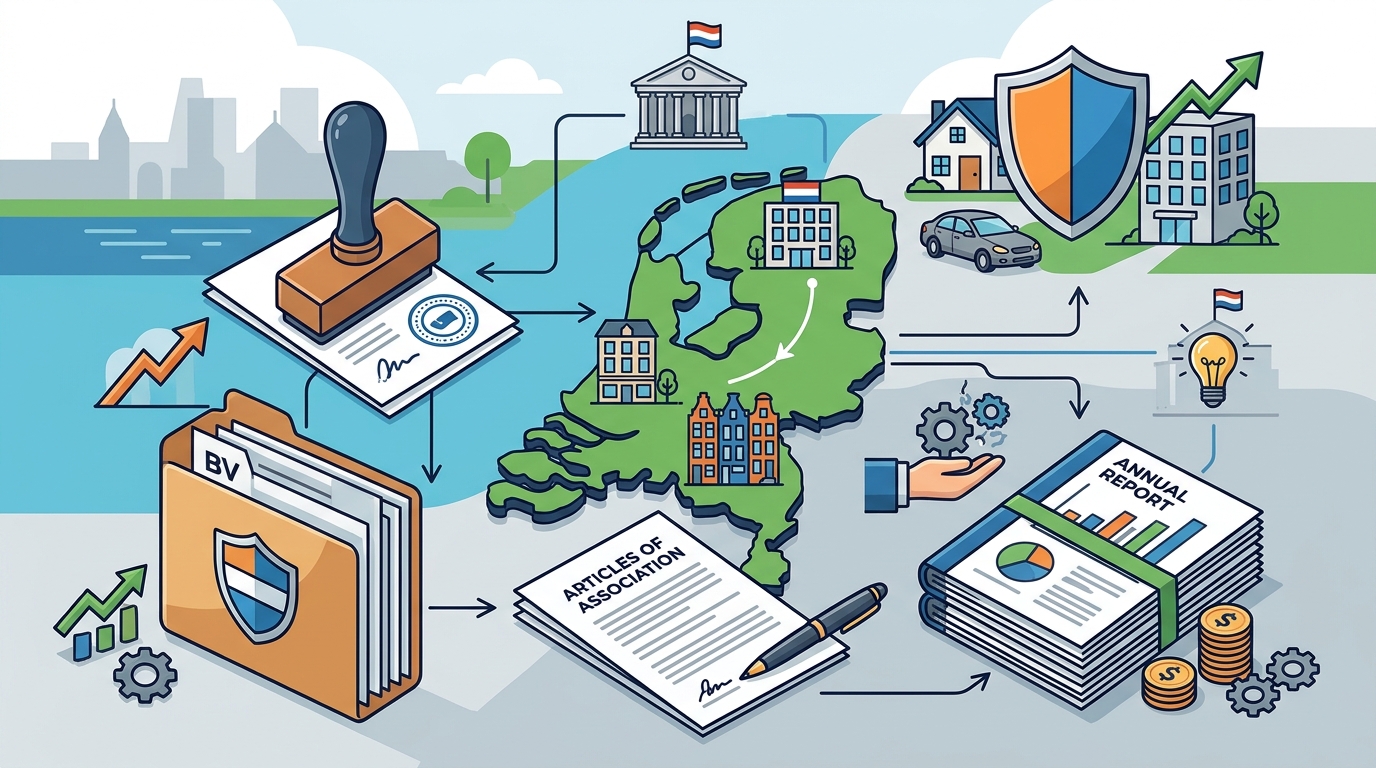
Incorporating a BV in the Netherlands requires a notary. The notary drafts the articles of association and registers the company with the Dutch Chamber of Commerce (Kamer van Koophandel). You must also register for VAT (BTW) and corporate income tax with the Dutch Tax Administration (Belastingdienst). The process typically takes a few weeks, depending on the notary's schedule and the complexity of the structure.
Once registered, you receive a Chamber of Commerce number and a VAT number. These are essential for invoicing and banking. It is crucial to set up a business bank account immediately to keep personal and business finances separate. This separation is not just a best practice; it is a legal requirement for maintaining the limited liability status of the BV.
Immediate Tax Obligations and Deadlines
A BV faces several recurring tax obligations. Corporate income tax (vennootschapsbelasting) is the primary tax, calculated on the company's profits. Additionally, you must file quarterly VAT returns and, if you employ staff, payroll tax (loonheffing) returns. The corporate income tax return is due five months after the end of the financial year. Missing these deadlines can result in penalties, even if no tax is due.
Understanding the difference between salary and dividends is critical for directors. Directors of a BV are required to pay themselves a mandatory salary, which is subject to income tax and social security contributions. Dividends are paid from profits and are taxed differently. Balancing salary and dividends requires careful planning to optimize your overall tax position. Schmitz Tax Services provides ongoing advice on this balance, ensuring your compensation structure aligns with your personal and business goals.
Bookkeeping and Annual Accounts
Every BV must maintain proper bookkeeping and prepare annual accounts. These accounts must be filed with the Chamber of Commerce within twelve months of the end of the financial year. Accurate bookkeeping is the foundation for your tax returns. If your records are incomplete or outdated, your tax filings may be incorrect, leading to potential audits or penalties. Keeping your records up to date throughout the year prevents year-end surprises and ensures you have the data needed for strategic decisions. according to System of National
At Schmitz Tax Services, we offer full bookkeeping services that keep your records current. We process your financial data into VAT returns and provide interim reporting. This approach allows you to see your financial position in real time, rather than waiting for the year-end close. Up-to-date records also make it easier to spot errors early, reducing the administrative burden when the annual accounts are prepared.
Common Mistakes to Avoid
One common mistake is treating the BV as a personal piggy bank. Directors often withdraw funds without proper documentation, which can blur the line between personal and business assets. This can jeopardize limited liability and create tax issues. Another mistake is ignoring the mandatory director's salary. Failing to pay a reasonable salary can lead to disputes with the Tax Administration, who may reclassify dividends as salary.
Finally, many first-time owners underestimate the administrative workload. Running a BV requires more than just invoicing; it involves managing multiple tax returns, maintaining statutory records, and filing annual accounts. If you do not have the time or expertise to handle this, consider professional support. Schmitz Tax Services acts as your in-house tax department, handling the administrative burden so you can focus on growing your business.
Key Takeaways
- A BV offers limited liability, protecting personal assets from business debts.
- Incorporation requires a notary and registration with the Chamber of Commerce.
- Directors must pay a mandatory salary, which is taxed differently from dividends.
- Annual accounts must be filed with the Chamber of Commerce within twelve months.
- Accurate, up-to-date bookkeeping is essential for correct tax filings.
- Professional advice helps balance salary and dividends for optimal tax efficiency.
Frequently Asked Questions
Do I need a notary to form a BV?
Yes, a notary is required to draft the articles of association and register the BV with the Chamber of Commerce. The notary ensures the legal requirements are met.
What is the difference between a BV and a sole proprietorship?
A BV is a separate legal entity with limited liability, while a sole proprietorship is not. In a sole proprietorship, you are personally liable for business debts.
How much does it cost to form a BV?
Costs include notary fees, Chamber of Commerce registration fees, and initial capital. The exact cost depends on the notary and the complexity of the structure.
Can I convert my sole proprietorship to a BV?
Yes, you can convert an existing sole proprietorship into a BV. This process requires careful planning to manage tax implications.
What are the tax obligations of a BV?
A BV must file corporate income tax, VAT, and payroll tax returns. It must also prepare and file annual accounts with the Chamber of Commerce.
Do I need to pay myself a salary as a director?
Yes, directors of a BV are required to pay themselves a mandatory salary. This salary is subject to income tax and social security contributions.
Next Steps for Your Business
Forming a Dutch BV is a significant step that requires careful planning and ongoing management. By understanding the legal, tax, and administrative requirements, you can build a solid foundation for your business. Schmitz Tax Services provides the expertise you need to navigate this process, from initial advice to ongoing compliance. To plan your visit, for a free introductory conversation.