
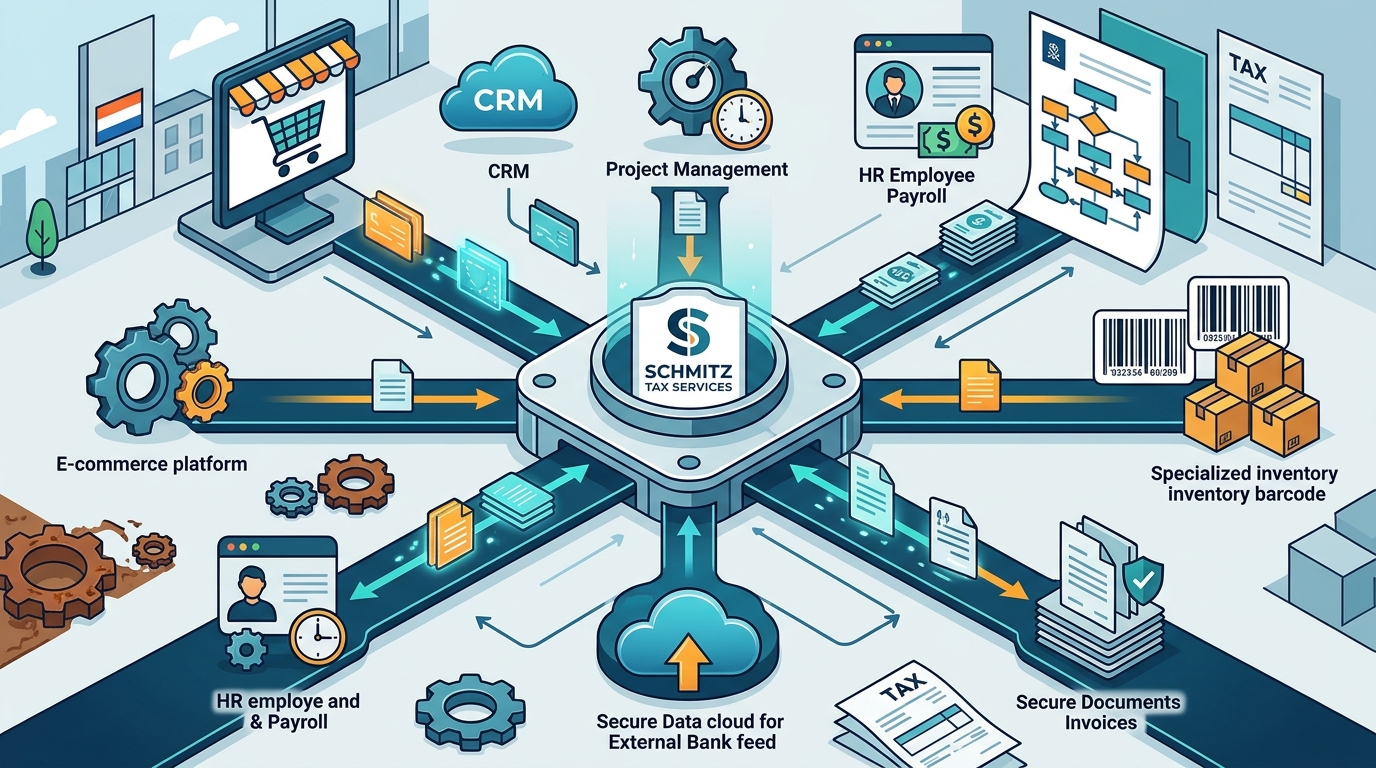
Outsourcing your Dutch tax and finance operations is not just about handing over paperwork. It is about connecting your existing digital infrastructure with your new service provider. When systems are properly integrated, data flows automatically, reducing manual entry and the risk of errors. This listicle outlines the seven key systems you should consider connecting to ensure a seamless transition and efficient ongoing operations.
1. Accounting Software
Connect your core ledger to your provider's platform. Your primary accounting software, such as Exact Online, Minox, or Sage, is the heart of your financial data. Integrating this system allows your tax adviser to access real-time transaction data rather than relying on static exports. This connection ensures that the figures used for VAT and income tax returns are always current and accurate.
2. Banking and Payment Platforms
Automate bank feed synchronization for cash flow visibility. Linking your business bank accounts and payment processors like Stripe or PayPal provides a complete view of cash movements. This integration helps in reconciling accounts quickly and identifying discrepancies early. It also supports the preparation of accurate annual accounts and financial statements.
3. Payroll Systems
Sync employee data and salary calculations with tax filings. If you employ staff in the Netherlands, your payroll system must communicate with your tax provider. This ensures that wage taxes, social security contributions, and pension contributions are calculated and reported correctly. Proper integration prevents late filings and penalties related to payroll tax obligations.
4. Invoicing and CRM Tools
Align sales data with revenue recognition and VAT reporting. Your Customer Relationship Management (CRM) and invoicing tools generate the data behind your revenue. Integrating these systems ensures that sales figures match your accounting records. This alignment is critical for accurate VAT returns and for providing a clear picture of business performance to stakeholders.
5. Document Management Systems
Centralize receipts, contracts, and tax correspondence. A robust document management system or a dedicated receipt scanner application serves as the single source of truth for supporting documents. This integration allows your tax adviser to retrieve specific invoices or contracts instantly when preparing returns or responding to queries from the Tax Authorities. It reduces the time spent searching for physical or scattered digital files.
6. E-commerce and Marketplace Platforms
Aggregate sales data from online channels for compliance. If you sell through platforms like Amazon, Bol.com, or your own webshop, these systems must be integrated. This is particularly important for businesses dealing with cross-border sales and the EC Sales List. Automated data extraction from these platforms ensures that all digital sales are captured for VAT and corporate income tax purposes.
7. HR and Time Tracking Software
Link labor hours to cost allocation and profit analysis. For service-based businesses, time tracking and HR systems provide data on labor costs and project profitability. Integrating these tools helps in allocating costs correctly across different activities or clients. This data is valuable for both tax planning and strategic business decisions, ensuring that your financial reports reflect the true cost of operations.
Choosing the Right Integration Strategy
When selecting which systems to integrate, prioritize those that handle high-volume, recurring data first. Start with your accounting software and banking feeds, as these form the foundation of your financial records. Then, expand to payroll and invoicing systems based on your business model. A phased approach reduces disruption and allows you to verify data accuracy at each step. The goal is to create a unified data ecosystem where your tax provider can work efficiently without constant manual data requests.
Frequently Asked Questions
Do I need to replace my current accounting software to outsource?
No, you do not need to replace your software. Most tax providers can integrate with popular Dutch accounting platforms. The key is ensuring that the data export or API connection between your software and your provider is reliable and secure.
How does integration affect the cost of outsourcing?
Proper integration can reduce long-term costs by minimizing manual data entry and reconciliation time. While there may be initial setup efforts, the efficiency gains often offset the investment. Your provider should be able to advise on the most cost-effective integration path for your specific setup.
What if I use multiple systems for different departments?
This is common in growing companies. The goal is to ensure that all systems feed into a central accounting ledger. Your tax provider can help map out how data flows from your CRM, payroll, and e-commerce platforms into your main accounting system to ensure consistency.
Is it safe to share my financial data with an external provider?
Yes, provided the provider follows strict data protection protocols. In the Netherlands, data handling is governed by GDPR. Reputable tax firms use secure platforms and encrypted connections to protect your financial information. You should always review the data processing agreement before sharing sensitive data.
How long does the integration process usually take?
The timeline depends on the complexity of your systems. Simple connections, like bank feeds, can be set up in days. More complex integrations involving multiple platforms may take a few weeks. A clear project plan from your provider will help you manage expectations and ensure a smooth transition.
Next Steps
Integrating your systems is a critical step in outsourcing your Dutch tax and finance services. It ensures that your new provider has the right data to deliver accurate and timely advice. If you are considering outsourcing, start by mapping out your current digital infrastructure. Then, discuss integration options with a provider who understands your specific business needs. Contact Schmitz Tax Services to discuss how we can help you connect your systems and streamline your financial operations.